

In Canada, parking choices expose auto glass to heat, cold, debris, theft, and vibration before the vehicle moves. Severe weather losses reached $9.4 billion in 20241, with hail among the major causes. Windshields support cabin strength and passenger airbag deployment. The best parking tips to avoid windshield damage start with reducing stress on the glass while the vehicle is sitting still. That makes parking a practical part of daily glass care – a habit our local windshield experts recommend building into your routine long before a chip ever appears.
Parking Tips to Avoid Windshield Damage
A safe spot limits impact, temperature swings, and contact with contaminants. Curbside spaces beside active traffic carry higher risk because passing tires throw gravel, road salt, and loose grit toward parked vehicles. Construction zones add machinery, dump trucks, and road milling. Whenever possible, park in a garage, covered lot, or private driveway. Keep distance from traffic lanes, gravel shoulders, road work, dump truck access routes, and shopping cart returns. These safe parking tips for cars reduce forces that chip laminated windshields and shatter tempered side glass.
Does Parking Under the Sun Damage a Windshield?

Direct sun can contribute to cracking. Glass heats unevenly because the centre of the windshield can warm faster than the edges. If cold air conditioning blasts the hot glass, the temperature difference can push a small chip into a spreading crack.
To prevent windshield cracking in heat, crack the windows slightly when safe, use a windshield shade, and choose a covered shade over open asphalt. Do not aim cold vents at a hot windshield. Let the cabin temperature drop.
Windshield Protection Tips for Winter and Summer
Canada’s temperature swings make seasonal parking habits important. In winter, frozen glass reacts to sudden heat badly. Pouring hot water on ice or using maximum defroster heat can make the centre expand while the edges remain cold and rigid. That thermal shock explains why heat or cold cracks windshields: the danger comes from uneven change.
Use these tips when weather is extreme:
- Warm the vehicle slowly and start with low defroster heat.
- Use a fabric windshield cover instead of leaving wiper arms raised.
- Keep at least three metres from sloped rooflines, building eaves, and areas where icicles form.
- Avoid curbside parking on snowplow routes and streets treated by salt sanders.
- Inspect chips before a deep freeze or heat wave, since trapped water and thermal stress can expand damage.
What Causes Windshield Cracks While Parked?
Usually, a flaw already exists. A tiny stone chip concentrates stress at one sharp point. Heat, cold, chassis vibration, moisture, and ice expansion then work on that weak area. Water entering a chip can expand as it freezes, pushing glass layers apart. Road salt and grit can also contaminate the break, making later resin repair harder.
Tree parking adds chemical and physical risks. Branches, acorns, pinecones, and ice-laden limbs can strike glass directly. Sap creates visibility problems when wipers smear it across the windshield. If you find tree sap on your windshield, clean it before the blades drag resin over the glass and scratch the viewing area.
Parking Risk Comparison
| Parking Location | Main Glass Risks | Better Choice |
| Street Parking | Road debris, snowplows, sideswipes, theft | Move to a driveway, garage, or quieter side street |
| Open Lot | Carts, door impacts, foot traffic, sun exposure | Park away from entrances and cart corrals |
| Under Trees | Sap, bird droppings, falling branches, nuts, ice loads | Use open shade from buildings instead |
| Beside Buildings | Falling icicles, roof snow, security blind spots | Stay clear of eaves and dark corners |
| Enclosed Garage | Lowest daily exposure | Use it during storms, heat waves, and winter freezes |
The safest available space usually has distance from traffic, shade without tree hazards, and overhead protection from weather.
Safe Parking Around Trees, Roofs, and Sunroofs
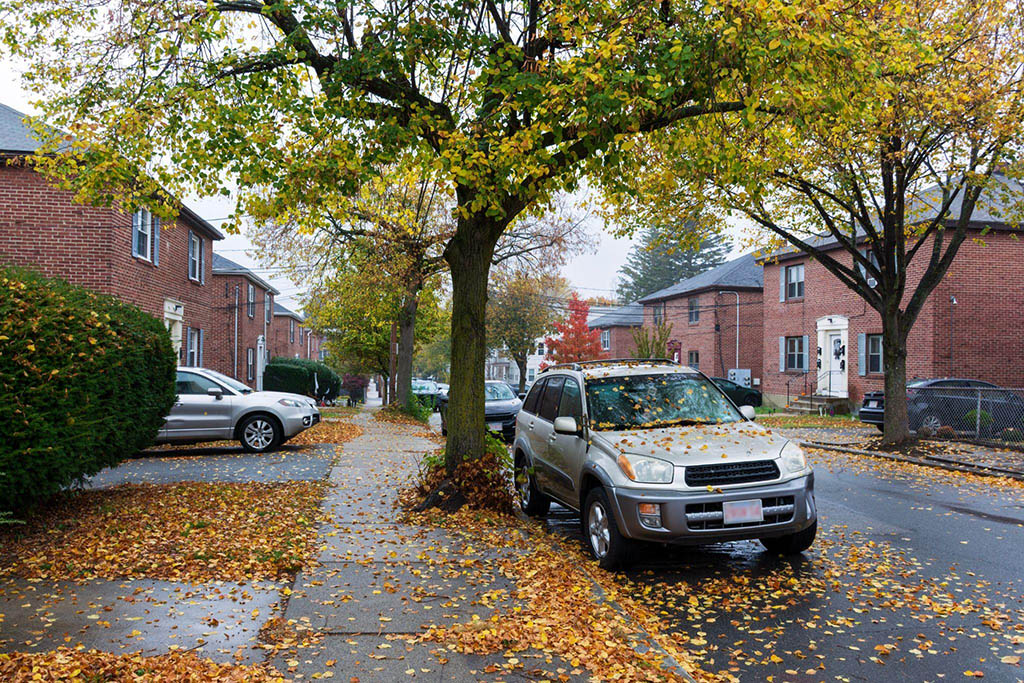
Shade feels useful in summer, but tree canopies create many glass risks. Pine resin can harden, oxidize, and bond to the glass surface. Bird droppings contain acids that can etch if left too long. During storms, falling limbs and heavy seeds can create star chips similar to gravel strikes.
Rooflines are another overlooked hazard. Sloped metal roofs can release compacted snow and ice as temperatures rise. A falling ice block can crush a windshield or damage a panoramic roof. Property standards treat roof snow and ice accumulation as a safety concern under Ontario rules for snow and ice accumulation. For vehicles with panoramic roofs, repeated heat, pressure changes, and impact exposure can increase the chance of sunroof glass damage.
What to Do If You Already Have a Chip
A chip changes every parking decision. Once glass is damaged, avoid strong temperature changes and rough environments until it is repaired.
- Cover a fresh, dry chip with clear packing tape to block moisture and grit.
- Do not wash the car or run wipers over loose debris until the chip is assessed.
- Avoid blasting air conditioning or defrost directly at the glass.
- Park away from pothole-ridden exits, gravel surfaces, and construction zones.
- Book resin repair quickly if the chip is small and outside the driver’s main view.
Ontario windshield visibility rules also make prompt repair practical because unsafe windshield conditions can create legal and safety problems. Prompt repair can preserve the factory seal and may avoid replacement, especially before winter freeze cycles spread the crack.
Final Car Glass Protection Tips for Everyday Parking
The strongest habit is a quick scan before leaving the vehicle. Look up for branches, roof edges, icicles, and bird activity. Look around for traffic lanes, construction debris, cart corrals, dark corners, and gravel. Look at the glass itself for chips that could spread under heat or cold.
If the goal is to avoid windshield cracks in winter/summer, choose covered parking during storms and extreme temperatures. Use gentle heating and cooling. Clean contaminants before they harden. Treat small chips like urgent repairs, not cosmetic marks.
Need auto glass help in Oakville? Get a quote from our team today.
References
- New Data Finds Severe Weather Inflicted Unprecedented Losses for Canadian Businesses in 2024. www.ibc.ca/news-insights/in-focus/new-data-finds-severe-weather-inflicted-unprecedented-losses-for-canadian-businesses-in-2024.